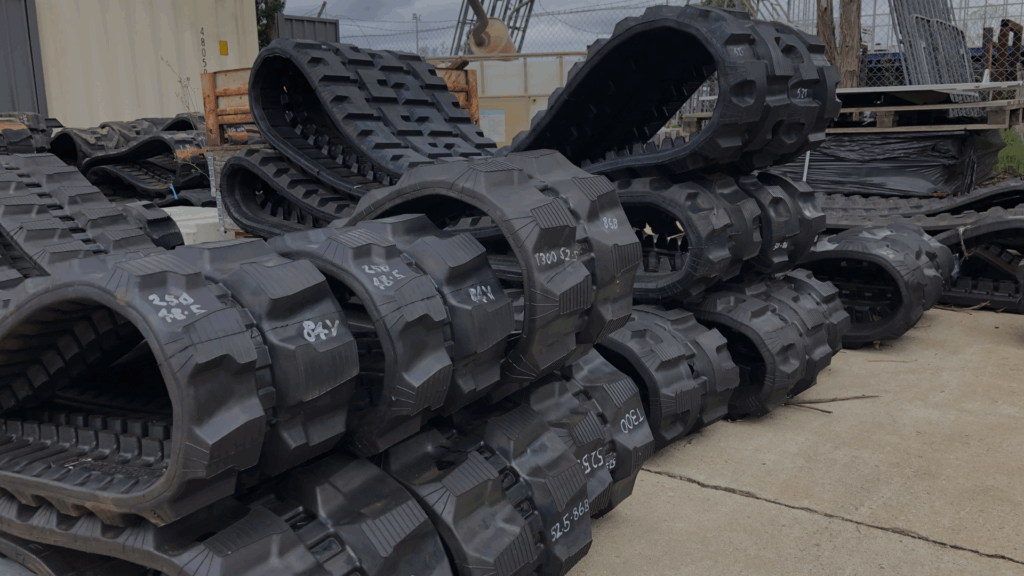
Track pads are a critical component of machinery used in construction, earthmoving, and agricultural operations across Australia. But how often should they be replaced?
The answer depends on several factors, such as the type of machinery, the operation and conditions it operates in, and how well the pads are maintained. This blog will explore the lifespan of track pads, the warning signs to watch out for, and tips to ensure you’re getting the most out of your investment.
Factors Influencing Track Pad Lifespan
- Operating Conditions – The terrain where your equipment operates plays a significant role in how long your track pads last. For example, rocky or abrasive surfaces wear out pads faster than soft soils or grasslands. Extreme heat, hydrocarbons or moisture can also affect the rubber material, shortening its lifespan.
- Type of Machine – Different machines wear out their track pads at different rates. Heavy machinery like bulldozers and excavators put more strain on their tracks compared to smaller equipment like mini excavators or tracked loaders.
- Usage Hours – As a general rule, track pads should be checked after every 500 hours of use, though machines operating under severe conditions may need more frequent / daily inspections. Some heavy-duty machines might require a replacement every 1,000 to 1,500 hours, while light-duty equipment may last longer.
- Maintenance Practices – Regular maintenance can extend the life of your track pads. Cleaning tracks and pads and debris after each use, checking for uneven wear, and ensuring proper tension on the tracks all contribute to prolonging their life.
Signs Your Track Pads Need to Be Changed
Here are some common indicators that it’s time to replace your track pads:
- Cracks or Splits: Visible damage like cracks or splits in the rubber means the pads are at the end of their lifespan and need immediate replacement.
- Uneven Wear: If your track pads are wearing unevenly, it could indicate alignment issues, but it also means the pads themselves are compromised.
- Reduced Traction: Worn-down pads result in decreased traction, which can compromise the machine’s tracking, performance and safety.
- Exposed Metal: Once the rubber is worn away, the metal components inside the pad may become exposed. This not only reduces effectiveness but can also cause damage to the undercarriage.
How Often Should You Replace Track Pads?
If you’re unsure whether your track pads need replacing, measuring their wear is an essential step. It’s important to check the thickness of the pads regularly to assess their condition. While there is no universal answer, here is a rough guideline based on usage and conditions:
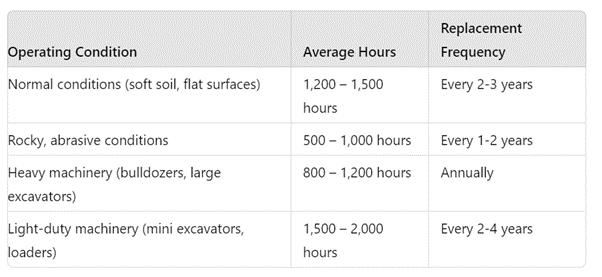
Note: These are general guidelines. Always refer to your machine’s manufacturer recommendations and adjust based on operating conditions.
Measuring Your Track Pads
Trackpads Australia provides a handy video on how to measure your track pads, offering expert advice on what to look for and how to ensure accuracy. Following these guidelines will help you make an informed decision and avoid premature wear or unexpected undercarriage equipment failures.
Why Regular Inspections Matter
Regular inspections can save you money in the long run by identifying issues before they become costly repairs. Consider scheduling an inspection every few hundred hours of operation, particularly if you’re working in challenging environments. Keeping track of the hours logged and scheduling maintenance can prevent downtime and ensure the safety of your crew.
Need Help with Your Track Pads?
If you’re unsure about the condition of your track pads or need assistance selecting the right replacements, contact the experts at Trackpads Australia. Our team is ready to guide you through the process, offering the best solutions tailored to your machinery and operating conditions. We also recommend visiting our website for more information and frequently asked questions regarding track pads and their maintenance.
By staying proactive with track pad care and knowing when to replace them, you’ll keep your machinery running smoothly and extend the life of your equipment and keep your machinery budget on Track.